The short answer
No. Being able to swim is not required for our canyoning trips in Guadeloupe: what matters is not being afraid of water. The neoprene wetsuit helps a lot with floating, no jump is compulsory and the guide adapts the route. For the red and black trips, you also need to be comfortable in the water, in fast water for Bois Malaisé.
Updated 1 November 2026.
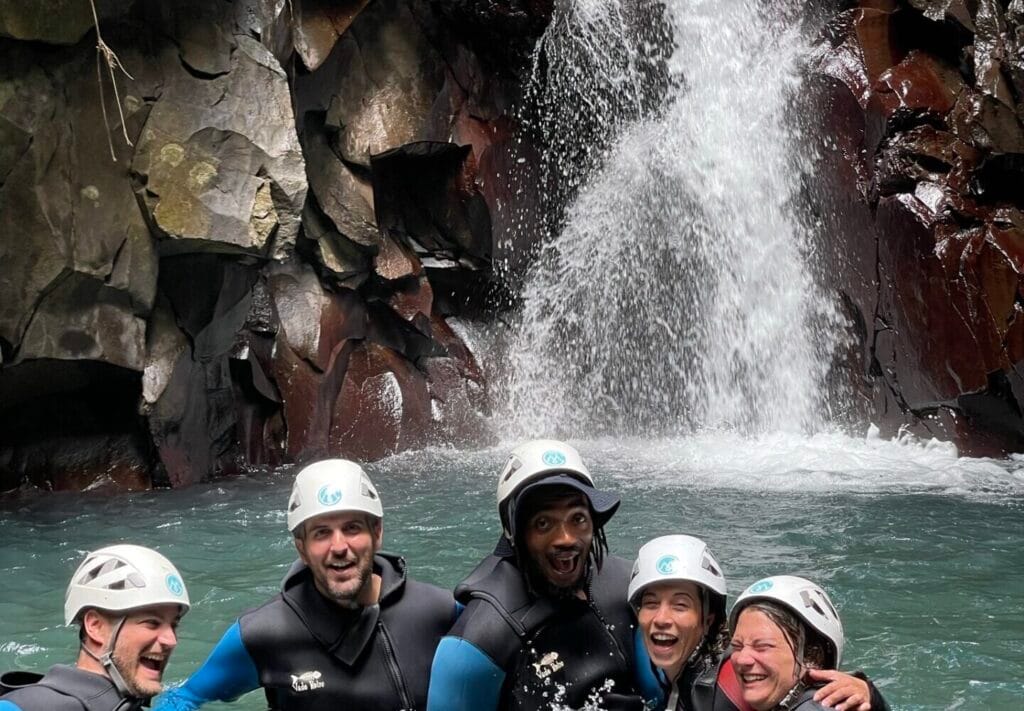
It is the question we hear most before a first trip. The answer fits in one sentence, but it deserves some detail: what “not being afraid of water” means, what changes from one trip to another, and what to put in your bag.
What it means in practice
A canyon is descended in a river: you walk in the water, you let yourself slide down natural slides, you cross pools where you can touch the bottom or not, and sometimes you jump. The neoprene wetsuit helps a lot with floating. What counts is therefore not how well you swim: it is accepting to have water around you, on your face and in the pools, without panicking.
Three things reassure you from the start. Every trip begins with a safety briefing. No jump is compulsory: there is always an alternative, on foot or on the rope depending on the spot. And you tell the guide what makes you uncomfortable: they adapt.
Trip by trip
| Trip | Level | What you need in the water |
|---|---|---|
| Acomat | Green | Not being afraid of water. Swimming, slides and small jumps of your choice, no abseil. |
| Bourceau | Blue | Not being afraid of water. No experience required. |
| Ravine Chaude – Bassin Bleu | Blue | Not being afraid of water; standard physical fitness is enough. |
| Grande Rivière Ferry, Deshaies | Blue | Not being afraid of water; standard physical fitness is enough. |
| Rivière Noire, Vauchelet | Red | Being comfortable in the water, with good physical fitness. |
| Bois Malaisé | Black | Being comfortable in fast water: many jumps, slides and technical passages. |
What about children?
Same rule: a child does not need to be able to swim, but must not be afraid of water. Two trips welcome children from age 8, accompanied by an adult: Acomat and Bourceau. See the page family canyoning (in French).
What we provide
The state-certified guide, the helmet, the harness with lanyards and a descender suited to your level, the neoprene wetsuit and socks, the canyon bag with waterproof drum, and the photos and videos of the trip. All the technical equipment is checked and disinfected after each trip.
What to bring
- Closed shoes with a flexible, grippy sole, which can get wet: running, trail or hiking shoes. Avoid sandals, flip-flops, Crocs and trainers with a smooth sole.
- A swimsuit, to wear under the wetsuit.
- A towel and a change of clothes for afterwards.
- A soft bottle of water (about 1 litre) and a snack; a picnic for the full day at Bois Malaisé.
- Sunscreen and mosquito repellent for the approach walk.
- A cord or a headband if you wear glasses, a hair tie for long hair.
Leave jewellery and valuables at home: your phone and keys travel in the waterproof drum. The full list is on the page What to bring for canyoning in Guadeloupe.
Before you leave
Arrive rested, well hydrated and after eating. Tell us when you book about any health problem, treatment, recent injury or pregnancy: the guide will adapt the trip or steer you towards a more suitable route. For the red and black trips, good stamina is needed: they last 5 to 7 hours and the approach or return walk often takes real effort.
To choose when to go, see When to go canyoning in Guadeloupe? Seasons, rain and water level.
Frequently asked questions
Can you go canyoning without being able to swim?
Yes. Being able to swim is not required on our trips: what matters is not being afraid of water. The neoprene wetsuit helps a lot with floating.
My child cannot swim: can they come?
Yes, from age 8 at Acomat and Bourceau, accompanied by an adult, if they are not afraid of water. The guide adapts the jumps and slides to each person.
What if I am afraid of jumping?
Nothing is compulsory. There is always an alternative, and the guide suggests without ever forcing. Just tell them what bothers you.
What shoes should I bring?
Closed shoes with a flexible, grippy sole, which can get wet. No sandals, flip-flops or Crocs.
Can you wear glasses?
Yes, with a cord or a headband to keep them on your nose.